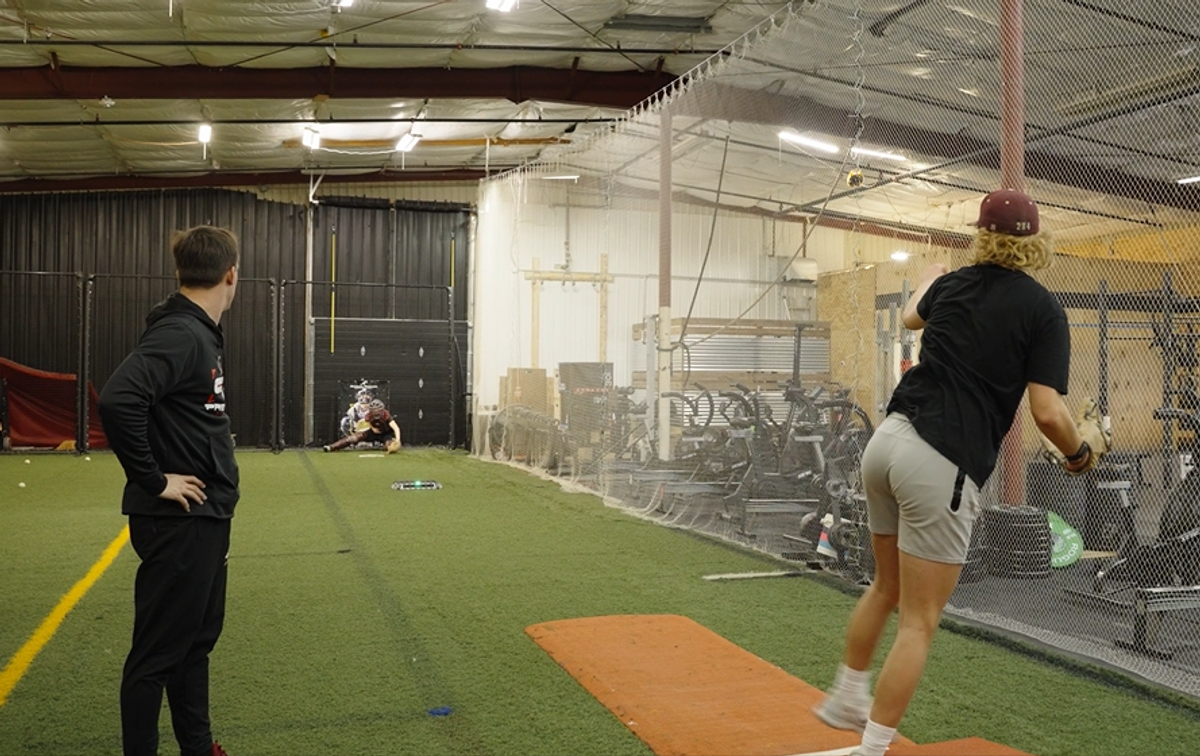
This time of year, pitchers are starting to ramp up. They're getting back into the facility, throwing more often, and thinking about where they want to be when the season starts. I like seeing that energy. The first question I ask, though, is what they've been doing for the last few weeks. A pitcher coming off fall ball and a pitcher who hasn't thrown in a month might come in on the same night, but they don't need the same first week.
At Precision Pitching, we use our National Pitching Association (NPA) guidelines to build a health-first plan. We look at how the athlete moves, what they can control, what they've been doing recently, and how they recover. Age gives us some context, but it doesn't tell us everything about what an athlete is ready for.
Build the week around the hard days
Our November and December work lays the foundation for bullpens later in the winter. That doesn't mean every pitcher gets on the mound the same week. We build from the work the athlete can handle now, and we pay attention to what happens after we add more.
When a lesson is the biggest or highest-effort throwing day of the week, that's the throwing work for the day. We don't send the athlete home to squeeze in more. We also want to know what else is on the calendar: team workouts, another sport, lifting, private lessons, and extra throwing. An easy day only works if the athlete actually keeps it easy.
A program can look individualized because it gives each pitcher different drills. But if th