Why Data Alone Won’t Make You a Better Pitcher: Turning Pitching Data Into Development
Why Data Alone Won't Make You a Better Pitcher
Data can tell you a lot about a pitcher--but it doesn't create development on its own. Coach C. explains how Precision Pitching combines data, individualized coaching, mechanics, arm care, workload management, and athletic development to help pitchers build lasting improvement.
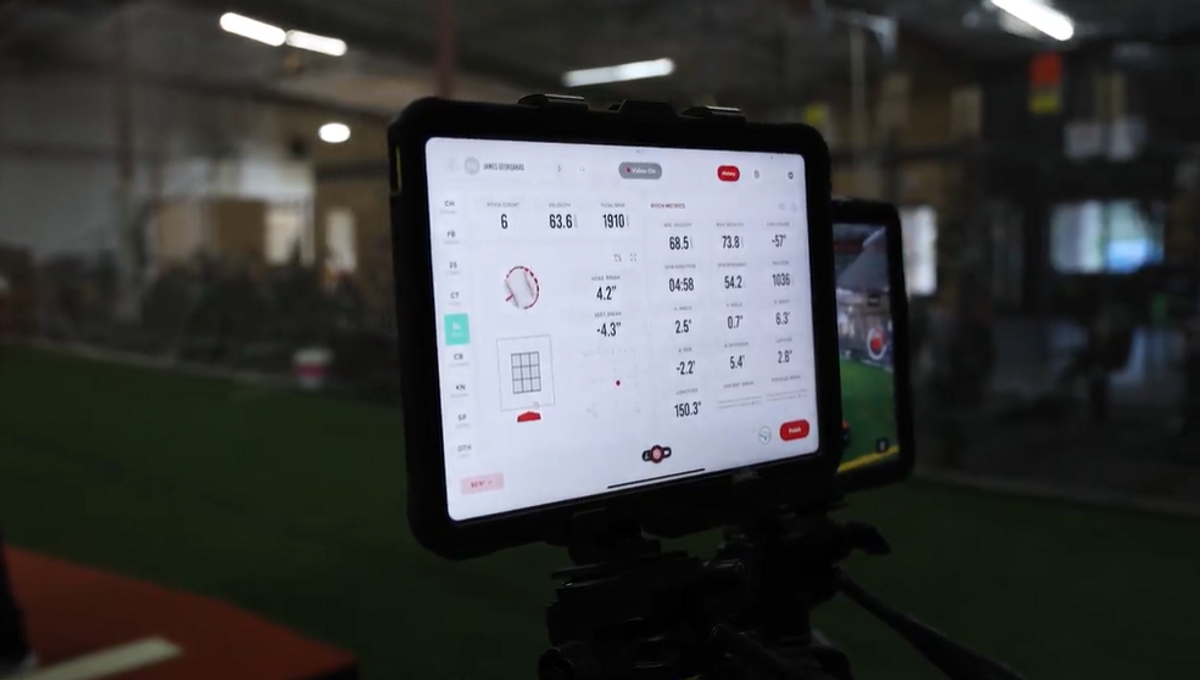
Baseball has more information available to athletes than ever before. Velocity. Spin rate. Movement profiles. Arm-care data. Video. Strength testing. Mechanical analysis. Pitch characteristics. I believe in that information. We use it at Precision Pitching. But there’s an important distinction: Having more data doesn’t automatically make you a better pitcher. The real question is what you do with it. That idea is at the heart of how we coach at Precision Pitching. The Numbers Aren’t the Program Technology can tell us a lot about an athlete. It can help us identify something we might want to investigate. It can confirm something we see on video. It can establish a baseline and help us determine whether training is actually producing the change we intended. But the number itself isn't the solution. At Precision Pitching, our process is much simpler: What do we see? Why does it matter? What should we train next? That means we don't collect data just because we can. We use evaluation, video, ArmCare, physical testing, pitch data and coach observation to better understand the individual athlete. Then we interpret that information in context, prescribe training and reassess the result. That's where coaching matters. Every Pitcher Is an Individual One of the biggest mistakes in pitching development is assuming every athlete needs to look the same. They don't. Two pitchers can be the same age and throw the same velocity while needing completely different programs. Their movement may be different. Their strength may be different. Their workload history may be different. Their ability to understand and retain coaching may be different. Their arm-care needs may be different. Their goals and competitive calendars may be completely different. That's why we don't believe in forcing every pitcher into one delivery, one drill progression or one development model. We coach the athlete in front of us. Precision Pitching evaluates timing, direction, sequencing, energy transfer and repeatability rather than simply chasing cosmetic positions. We also look for the earliest meaningful limitation instead of trying to "fix" every difference we can see on slow-motion video. Sometimes improving one upstream part of the delivery improves several things downstream. That's development. A Program, Not a Lesson This may be the biggest difference in how I want families to think about Precision Pitching. Pitching development isn't a collection of lessons. It's a program. A great 60-minute session means very little if it has no connection to what the athlete does during the other 167 hours of the week. What did he throw yesterday? When does he pitch next? Is he lifting? Does he play another sport? How is he recovering? What is his current workload? What are we trying to improve over the next six weeks—not just today? Our programming standards require us to look at the complete week: games, practices, bullpens, lessons, strength training, other sports, arm care, recovery and even additional throwing that happens outside the program. That changes the coaching conversation. Instead of asking: "What drill should this pitcher do?" we start asking: "What does this athlete need next, and where does that training fit into his overall development?" The Drill Has to Solve a Problem I like drills. But I don't believe in doing drills simply because they look good on social media or because a professional pitcher happens to be doing one. Every drill needs a reason. At Precision Pitching, we want to know the problem we're addressing, why the drill fits that athlete, what the athlete should feel or accomplish, and—most importantly—whether the change transfers back into normal throwing. Our approved drill system specifically tells coaches not to keep a drill simply because it looks advanced. That last part matters. You can become really good at performing a drill without becoming better at pitching. The goal isn't to win the drill. The goal is to change the throw. We Train Developmental Readiness, Not Just Birthdays Another major part of our system is understanding an athlete's neurological and training age. Chronological age matters for safety and appropriate training boundaries, but a birthday alone doesn't tell me what an athlete is ready to do. I want to know: Can he understand the task? Can he organize the movement? Can he repeat it? Can he retain the coaching? Can he control his effort? Can he maintain quality as intensity increases? Can he tolerate and recover from the workload? An athlete can even be at different developmental levels in different areas. He might have advanced pitching mechanics but still be developing in strength training or workload management. That's why progression at Precision Pitching is earned through demonstrated readiness rather than assumed from age, size or velocity. Velocity Matters. How We Develop It Matters More. Pitchers want to throw harder. I understand that. Velocity matters in baseball, and developing it can absolutely be part of the program. But we're not interested in sacrificing long-term development or arm health to chase a short-term radar-gun number. Velocity is influenced by movement quality, physical capacity, athleticism, sequencing, intent, throwing development and recovery. That's why high-intent throwing has to be earned. We want athletes prepared to handle the work before simply asking them to throw harder. Our programming standards specifically call for health, workload tolerance, preparation, strength and movement quality before progressing high-intent throwing. For younger pitchers especially, development should still include athleticism, coordination, throwing skill, confidence and enjoyment. We're trying to build pitchers—not chase readings. Coaching Is What Connects Everything This is ultimately why I believe coaching still matters so much in a data-driven baseball world. Technology can measure. Video can reveal. Testing can identify. But someone still has to determine: What does this mean for this athlete? Then we have to turn that answer into something the athlete can actually execute. A drill. A cue. A throwing progression. A strength priority. An arm-care routine. A workload adjustment. A pitch-development strategy. Or sometimes, simply leaving something alone because it isn't the athlete's biggest priority right now. That's Precision Pitching. Individualized development. Science-informed coaching. Data with a purpose. And a program designed around the athlete—not the other way around. Because more information isn't the goal. Becoming a better, healthier, more complete pitcher is. — Coach C. Precision Pitching | Red Wing, Minnesota

75+
Pro/College Athletes Trained
1000+
Athletes Trained
20+
Years of Experience
What Happens Next?
1. Submit the sign-up form:
-Tell us a little about the athlete, goals, experience level, and what you're looking for.
2. Complete player onboarding:
-We'll gather the information we need to better understand the athlete's current development.
3. Schedule your free phone consultation:
-You'll connect with Coach C to review goals, answer questions, and discuss the best next step.
4. Begin with the right plan:
-Based on the conversation, we'll help determine whether an evaluation, membership, remote program, private session, drop-in, or camp is the best fit.